Wearables
Cross-device interaction framework
Year
N/A
Type of Project
R&D System Design
My Role
Senior Design Lead, Camera
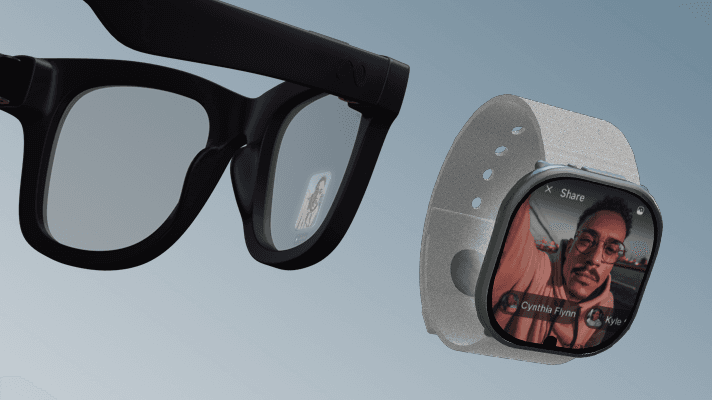


Capture and share across devices
Objective
I defined how capture and share would work across Meta's glasses and wrist wearables. These were the foundational interaction patterns for a device category that didn't exist yet. The vision was "connected but present": capture a moment, share it with someone you care about, and return to what you were doing without pulling out your phone.
Capture depended on the camera reading what someone looked at and what they wanted from it. Share depended on reaching the people they cared about most without leaving the moment. But glasses and wrist were being built by separate teams; nobody had defined how content and actions would flow between them.
Strategy
I diagnosed fragmented experiences across three teams, then built alignment through prototypes and a cross-org summit. I redesigned the camera UI to cut capture time in half and collapsed the gap between capture and share. As scope expanded, I took on the handoff: capture on glasses, share from wrist.
On the capture side, I connected visual input, intent, and model interpretation so the camera could act on a glance rather than a menu. On the share side, I rebuilt Favorites into a ranked contact service across both devices and connected AI-assisted replies, so the right person and a usable message surfaced together at the moment of sharing.
I led a six-week summit that produced a framework: clear rules for how wrist/glasses experiences can work across devices. I also built prototyping infrastructure that enabled the entire design org to validate on device.
Outcome
Capture time cut in half, usability KPIs nearly doubled, and my framework became plan of record. The camera redesign shipped—faster capture and better shots, setting the new standard. The camera intelligence raised AI camera usage and satisfaction, and AI-assisted captioning carried capture into share as a single voice-driven flow. Favorites shipped as a shared ranked contact service, so reaching the right person worked the same way on wrist and glasses.
The cross-device framework gave engineering teams a shared spec to build against for all wrist/glasses experiences. 100% of wearables designers adopted on-device prototyping, cutting iteration cycles from weeks to hours. Demo hours scaled from a pilot to an org-wide ritual that leadership cited as culture-building.
Solutions
Experience
Camera OS redesign
Sharing system
Hardware integrations
Capture-to-share flow
Camera intelligence
Contact ranking
Infrastructure
On-device prototyping
Hardware integration
Demo hours ritual
Designer enablement
Model behavior tuning
Human/AI validation
Alignment
New framework
Cross-device specs
Six-week design summit
Executive communication
AI-assisted messaging
Shared contacts